
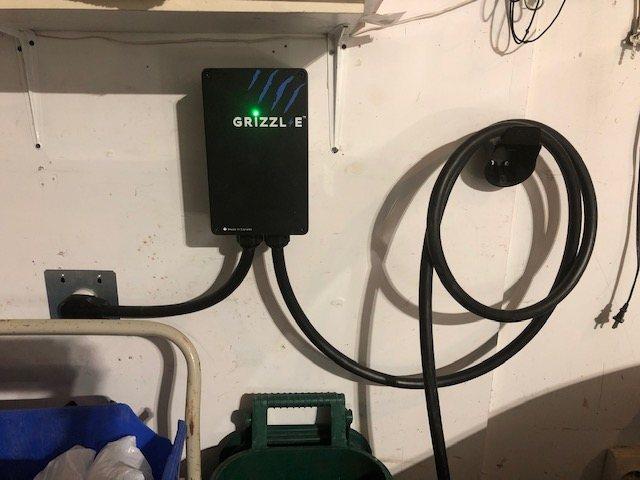
Most Tesla owners in Ontario end up charging at home on a Tesla Wall Connector. From the outside it is a tidy box on the garage wall with a cable and a handle. Behind it sits a 240 volt branch circuit, a breaker that has to match a setting programmed into the unit, a filing with the Electrical Safety Authority (ESA) and, in some houses, a question about whether the panel has room at all.
This guide walks through a Tesla charger installation from the electrical side. The product details come from Tesla's own installation manual and support pages, the permit and licensing rules come from ESA, and the charging basics come from Natural Resources Canada (NRCan). Where a Tesla page is written for North America in general rather than Canada, we say so.
What the Tesla Wall Connector is and what it asks of your house
The Tesla Wall Connector is a Level 2 charger. NRCan describes a Level 2 EV charger as a high-voltage appliance with electrical requirements much like an electric stove or dryer (240 volts), and says that in most jurisdictions it must be installed by a licensed electrician. Its "Plugging in" page puts Level 2 charging at 16 to 97 kilometres of range per hour of charging, depending on the vehicle.
Compare that with the cord that plugs into a regular wall outlet. NRCan's ENERGY STAR page on EV chargers says Level 1 chargers use a 120 V wall outlet and provide 3 to 8 kilometres of range per hour of charging time. For a driver who covers a long commute or tops up several times a week, that gap is the reason to install a Wall Connector in the first place.
So the house has to supply three things: a dedicated 240 volt circuit sized for the setting you choose, enough spare capacity in the electrical service to carry that circuit alongside everything else, and a mounting spot the cable can reach from where the car's charge port ends up when parked.
Tesla Wall Connector breaker size and amperage settings
Tesla's Gen 3 Wall Connector manual for North America is direct about the top setting: for maximum power output, install a standard double pole 60 amp circuit breaker. The manual also has a breaker table with columns for circuit breaker (amps), max output (amps) and power output at 240 volts (kW), so a smaller breaker means a lower charging output.
The unit does not guess which breaker it is on. During commissioning, the installer works through Tesla's setup steps and, in Tesla's words on its Canadian support page, enters the installation country and breaker size under Installation Settings. That number tells the Wall Connector the most current it may draw. If the breaker in the panel and the setting in the unit disagree, something is wrong and needs to be fixed before the car charges.
A 60 amp circuit is not a requirement. The manual says that if the electrical supply is unable to support the 60 amp configuration, select a lower amperage configuration. For a lower setting, it tells the installer to refer to local electrical code to select correct conductors and ground wire size. In Ontario, local code means the Ontario Electrical Safety Code, which is why wire sizing is a job for the contractor and not something to copy from a forum post or a US video.
In practice, the right setting is a balance. A higher one charges faster but takes a bigger share of the service. A lower one charges more slowly but may fit in a house that could not otherwise take a charger without an upgrade. Many drivers who charge overnight never notice the difference.
Does your panel have room for a Wall Connector?
Before anyone talks about mounting heights, the contractor needs to know whether the service can carry the new circuit. That answer comes from a load calculation, or from the home's recorded demand history, and it sometimes says no. ESA's EV charging page is clear about what follows: if your home requires an electrical panel upgrade, you will need to contact your local utility.
A no from the calculation does not always mean a bigger service. Tesla builds load control into the Wall Connector itself. Its support page describes Power Management as three features: Static Power Management, Dynamic Power Management and Group Power Management.
Static Power Management is the fixed option. Tesla's support page says it sets a maximum charge for your Wall Connector that works with your home electrical system, which in practice is the lower breaker and setting described above. It needs no extra hardware, and the limit does not move with the rest of the household load.
Dynamic Power Management watches the whole house. Tesla's installer documentation, which uses the name Smart Current Limits, describes it as letting the Wall Connector dynamically adjust EV charging power based on live readings of the overall load in the panel. Tesla's own example is a dryer and a water heater running at the same time: the car charges more slowly while they run and more quickly when household use drops, for example at night. Tesla's support page says this feature requires the purchase and installation of a Tesla-approved power meter, sold separately, and that it is only available for single Wall Connector installations.
Whether a particular metering setup can be counted that way in an Ontario load calculation is a code question for the Licensed Electrical Contractor doing the work. Our post EV Load Management in Ontario: When an EVEMS Can Spare You a Service Upgrade explains how ESA and the Ontario code treat load control, so we will not repeat it here.
One practical point: Tesla's support page says an internet connection is not required to enable or use the Power Management features. It still recommends keeping the Wall Connector on Wi-Fi so it receives firmware updates and remote troubleshooting. A garage with weak Wi-Fi will not stop the load control from working, but it is worth fixing anyway.
Have electrical work in mind? Get a free quote.
Licensed & Insured | ECRA/ESA 7014730
Two Teslas on one service: Group Power Management
Households with two electric cars often assume they need two full-size circuits and a larger service. Tesla's Group Power Management is meant for exactly that case. Its North American manual describes power sharing among up to six Gen 3 Wall Connectors, and states that total current output of Wall Connectors that share power will never exceed the site's total allocated power.
Each unit still gets its own branch circuit, so the panel work is not trivial. The difference is that the installer sets one combined limit for the group, and the units hold their total output under it together. Tesla's manual also says an electrician will need to determine the correct amount of amperage and confirm that the load centre has appropriate overcurrent protection, so the group limit comes out of the same load review as everything else.
Tesla's support page also notes that Dynamic Power Management, the whole-house version, works only on a single Wall Connector. If you want two units that also respond to the rest of the house, talk it through with your contractor before buying hardware, because the two features cannot simply be stacked.
Tesla wall connector installation step by step in Ontario
Every installation follows the same broad order, though the details change from house to house.
1. Site visit and load review. The contractor looks at the panel, works out the spare capacity and picks a breaker size and setting. This is also when the route for the cable from the panel to the parking spot gets planned.
2. The ESA notification. ESA's page on EV charging systems says a Licensed Electrical Contractor (LEC) must file a notification of work (i.e. permit) with ESA before starting an EV charger installation. The same page explains that this filing is separate and distinct from building permits. A municipal building permit, if you have one for other work, does not cover the electrical side.
3. Checking the equipment. ESA says an EV charging system must carry the official mark or label of an accredited certification body, and that before an electrical product is used, sold, displayed or advertised for sale in Ontario, it needs to be approved by an accredited certification or evaluation agency. Look for that mark on the unit and on any separate meter, especially if either was bought second hand or online.
4. Running the circuit and mounting the unit. The new breaker goes into the panel, the cable runs to the mounting spot and the Wall Connector is fixed to the wall.
5. Commissioning. The installer uses Tesla's setup process to program the installation country, the breaker size and any power management settings.
6. ESA review and the certificate. Once the work has been reviewed and passed, ESA's Certificate of Acceptance page says ESA will issue a Certificate of Acceptance to the person who filed the notification. If a contractor filed for you, ask for a copy and keep it with your house papers.
Mounting the Wall Connector inside or outside
A garage wall is the easy case. The unit and its cable stay out of the weather, and the circuit run is often short if the panel is on the other side of the wall or directly below.
Outdoor mounting is common in Ontario too, on a driveway wall or beside a carport. NRCan's ENERGY STAR advice on choosing a charger says that if your parking spot is outdoors (but not in a garage), an outdoor rating will be essential. The cable route and the fittings at the wall also have to suit an outdoor location, and the position should keep the cable clear of walkways, snow clearing and the swing of a garage door.
Think about the second car before choosing a spot. If a second EV is likely in the next few years, mounting the first Wall Connector where it can reach either parking space, or leaving room for a second unit, saves rework later.
Who is allowed to install a Tesla charger in Ontario
Tesla's Canadian store page for the Wall Connector says it must be installed by a qualified electrician. Tesla's Canadian home charging page says you can work with your own electrician or connect with a Tesla Certified Installer. The choice is yours, and Ontario law adds its own condition to whichever route you take.
That condition comes from ESA. If you hire someone, it has to be a Licensed Electrical Contractor. ESA's guidance on finding the right contractor says these businesses have a 7-digit ECRA/ESA licence number that proves they are authorized to offer electrical work to the public in Ontario. Ask for that number and check it before booking.
Homeowners can do electrical work in their own homes, but only by following ESA's process. ESA's do-it-yourself page says you must file a notification with ESA, and that friends, family members or neighbours cannot perform electrical work in your home. A handyman who offers to wire a charger on the side is not an option either.
Skipping the filing is more common than you might think. In its Winter 2025 PluggedIn newsletter, ESA reported that by cross-referencing EV registration data with notifications filed for chargers, it found that a staggering 25% of homes with EV chargers had skipped an ESA permit. An unfiled charger has no ESA Certificate of Acceptance behind it, and that can come up later with an insurer or a buyer.
Tesla charger installation cost in Ontario
We do not quote Tesla's hardware prices here, since they change and Tesla publishes its own. For the electrical work, KV Bear Electrical's published range is $800 to $2,500 for a home EV charger installation in Ontario (as of November 2026), and a Tesla Wall Connector falls under that same range.
What moves a job up or down within it:
The distance and route from the panel to the mounting spot. A garage directly above or beside the panel is a short run. A detached garage, a finished basement ceiling or an outside wall on the far side of the house adds material and labour.
The breaker size you choose. A 60 amp circuit for full output needs heavier conductors than a 40 amp one.
Panel space and capacity. If the panel has a free space and the load calculation passes, the job stays simple. If it needs rearranging or a subpanel, the cost rises.
Power management hardware. A Tesla-approved meter for Dynamic Power Management is an added part and added work, though it can avoid a far larger expense.
A service upgrade, if the calculation says one is needed, is quoted separately, along with anything the local utility charges for its side of the work. For a fuller breakdown that applies to any brand, see our post How Much Does an EV Charger Installation Cost in Ontario?
If you would like your house looked at for a Tesla Wall Connector, call KV Bear Electrical at 905-999-5048 or request a quote, and send a photo of your panel label with the request.
Frequently Asked Questions
Does a Tesla Wall Connector have to be on a 60 amp breaker?
No. Tesla's North American manual recommends a double pole 60 amp breaker only for maximum output, which its table lists as 48 amps. It also says to select a lower amperage configuration when the electrical supply cannot support 60 amps, and the installer programs the matching breaker size during commissioning.
Can I use my own electrician instead of a Tesla Certified Installer?
Yes. Tesla's Canadian home charging page says you can work with your own electrician or connect with a Tesla Certified Installer. In Ontario, whoever you hire must be a Licensed Electrical Contractor with a 7-digit ECRA/ESA licence number, and that contractor files the ESA notification before work starts.
Will a Tesla Wall Connector still manage power if my garage has no Wi-Fi?
Tesla's support page says an internet connection is not required to enable or use its Power Management features. Tesla still recommends connecting the unit to Wi-Fi so it gets firmware updates and remote troubleshooting.
Can two Tesla Wall Connectors share one supply?
Gen 3 Wall Connectors can be grouped with Tesla's Group Power Management, which its manual describes for up to six units. Each unit has its own circuit, and the group's total output never exceeds the limit the installer sets for the site.
Does a building permit cover a Tesla charger installation?
No. ESA says the notification of work for an EV charger is separate and distinct from building permits. A Licensed Electrical Contractor must file it with ESA before starting the installation, and ESA issues a Certificate of Acceptance once the work passes.
Sources
- Tesla: Gen 3 Wall Connector installation manual (North America)
- Tesla Energy Library: Gen 3 Wall Connector circuit breaker rating and maximum output
- Tesla Energy Library: Group Power Management overview
- Tesla: Optional Smart Current Limits (Wall Connector device setup)
- Tesla: Wall Connector Power Management (support)
- Tesla Canada: Installing a Wall Connector
- Tesla Canada: Home Charging
- Tesla Canada shop: Wall Connector
- ESA: Electric vehicles and charging systems
- ESA: PluggedIn newsletter, Winter 2025
- ESA: Do-it-yourself (DIY) electrical work
- ESA: Finding the right contractor
- ESA: Obtain a Certificate of Acceptance
- Natural Resources Canada: Electric vehicle charger installation
- Natural Resources Canada: Plugging in
- Natural Resources Canada: ENERGY STAR electric vehicle chargers
Facts checked November 22, 2026.
KV Bear Electrical Inc. is a licensed residential electrical contractor (ECRA/ESA 7014730) based in Oshawa, Ontario. The facts here come from the official sources listed above. Have a question about your home? Call 905-999-5048.
Related Services:
Related Guides
Electrical Wire Colour Codes in Ontario Homes: What Each Colour Tells You
White usually marks the neutral, green or bare marks the bond, and the other colours carry current. Ontario's code bulletins say what each colour means and where the exceptions are. Colour is never a safety test, though.
Read the guideKnob and Tube Wiring in Ontario: Code Status, Risks, Assessment and Replacement
A homeowner's guide to knob and tube wiring in Ontario: the years it was installed, why the 2021 Code did not force removal, the hazards ESA and Natural Resources Canada describe, and how an assessment and a phased rewire work.
Read the guideCanadian Electrical Code vs Ontario Electrical Safety Code: How They Fit Together
The Canadian Electrical Code is a national CSA standard. Ontario turns it into law, with its own amendments, as the OESC. Knowing how the two relate tells you which edition applies today and what that means when you plan electrical work at home.
Read the guide