
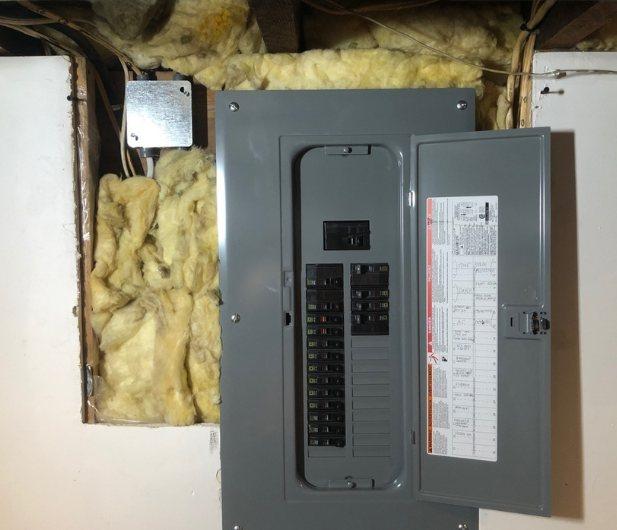
A heat pump is two jobs in one. The HVAC side moves refrigerant and air. The electrical side has to feed the outdoor unit, the indoor unit and often a backup heater, without overloading the house's service. Most of the questions homeowners ask before signing a contract fall on that electrical side: how many amps the unit draws, what size of breaker it gets, whether it needs its own circuit and whether the panel can carry it.
This guide answers those questions in the order an installer works through them. It draws on the Electrical Safety Authority (ESA), Natural Resources Canada (NRCan), Toronto Hydro and the manufacturers' own installation documents. Where a figure depends on the specific model, we say so instead of guessing at a number.
What heat pump electrical requirements cover
In Ontario the wiring for a heat pump is governed by the Ontario Electrical Safety Code (OESC), which ESA enforces. ESA's Summer 2024 PluggedIn newsletter for contractors explains why air conditioner rules come up so often in heat pump work: heat pumps are similar technology to air-conditioners and as such, the Ontario Electrical Safety Code (OESC) has several requirements that are applicable to this technology.
For a typical home installation, the electrical requirements come down to six items:
1. A branch circuit with conductors sized for the unit's minimum circuit ampacity. 2. Overcurrent protection (the breaker) that stays within the maximum the manufacturer allows. 3. A disconnecting means near the outdoor equipment. 4. Enough room in the service and panel, confirmed by a load calculation that counts the heat pump and any electric backup heat. 5. The right person doing the work, and the ESA notification filed. 6. Enough supply from the local utility if the service itself has to grow.
The sections below take these one at a time.
How many amps does a heat pump use?
There is no single answer, because the draw depends on the model, its capacity and whether electric heat strips are part of the system. The reliable number is printed on the equipment. Lennox's installation instructions for its CBA25UHE air handlers tell the installer: See unit nameplate for minimum circuit ampacity and maximum over-current protection size. Reading the nameplate on each piece of equipment is the first step in planning the circuit.
Two figures on that nameplate matter most. Minimum circuit ampacity (often shortened to MCA) is the smallest current rating the supply conductors may have. Maximum overcurrent protection (shown as MOP, MOCP or maximum fuse or breaker size) is the largest breaker or fuse the manufacturer permits on that circuit. Neither one is a reading of what the unit pulls at a given moment. They are the values the circuit has to be built around.
For the panel, the code treats the nameplate rating as a full load. ESA's Bulletin 8-3-15 says AC units have a demand factor of 100% as per Rules 8-200 to 8-210 and heat pumps shall be treated similarly. In other words, the load calculation does not discount a heat pump the way it discounts some household loads. If you want a quick sense of your own unit, look for the MCA and maximum breaker figures on the outdoor unit's label, or ask the installer for the electrical data sheet before the quote is signed.
Heat pump breaker size: reading MCA and maximum overcurrent
The breaker size for a heat pump is set by the manufacturer's data and the electrical code together, not by the tonnage alone. Lennox's air handler instructions state that wiring must conform to the current National Electric Code ANSI/NFPA No. 70, or Canadian Electric Code Part I, CSA Standard C22.1, and local building codes.
Daikin's installation instructions for its packaged air conditioner and heat pump units spell out the window the breaker has to fall in. For unit protection they call for a fuse or HACR circuit breaker that is in excess of the circuit ampacity, and they add in capitals: DO NOT EXCEED THE MAXIMUM OVERCURRENT DEVICE SIZE.
That gives a practical way to read a quote. The wire has to be rated for at least the MCA, using the Canadian Electrical Code tables. Lennox's instructions point installers to tables 1 through 4 in the Canadian Electric Code, Part I, CSA Standard C22.1 for selecting supply conductors. The breaker then has to sit between the MCA and the nameplate maximum. A breaker larger than the nameplate maximum is not a safety margin. It means the equipment is not protected the way its maker requires.
If a system has an indoor air handler with electric heat, the indoor unit carries its own nameplate and may need its own circuit, separate from the outdoor unit's. Read both labels before deciding how many breaker spaces the job needs.
Does a heat pump need a dedicated circuit?
The manufacturer documents we reviewed treat the supply circuit as part of the installation. Lennox's instructions put the responsibility on the installer: Electrical wiring, disconnect means and over-current protection are to be supplied by the installer. On most jobs that means a new circuit run from the panel to the equipment, sized from the nameplate as described above, rather than a tap off an existing circuit that already serves lights or receptacles.
NRCan makes a similar point about room air conditioners. Its guide to air conditioning your home says some room air conditioners, particularly those with larger capacities, will require a dedicated electrical circuit or have specific requirements regarding the current rating of the wiring and the breaker. It goes on to recommend that, with the help of an electrical contractor, you check existing wiring to determine how much additional load can be safely added, and that a new circuit be installed by a qualified electrical contractor and inspected for conformity with the electrical code.
The 115V ductless unit mentioned earlier is the exception its manufacturer describes. For a central system, ask the installer to show how many dedicated circuits the outdoor unit and any electric-heat air handler need, based on their nameplates.
Have electrical work in mind? Get a free quote.
Licensed & Insured | ECRA/ESA 7014730
The disconnect beside the outdoor unit
A disconnect lets a technician shut off power at the equipment instead of walking back to the panel. ESA's specification ESA-SPEC-007 for residential HVAC installations covers it for air conditioners, the equipment ESA describes as similar technology to heat pumps. For a replacement, the specification says a disconnecting means is required (OESC Rule 28-604 5)) within sight and within 3m of the equipment if the air conditioner was installed previously without one.
Location matters as much as presence. The specification says the disconnecting means shall be installed in a readily accessible location in accordance with OESC Rule 28-604 6), therefore it is not permitted to be mounted above or behind the air conditioning unit. It also calls for a working space of 1 m^2 with secure footing in front of electrical equipment, under OESC Rule 2-308 1).
Outdoor switches also wear out. ESA's specification warns that disconnects installed outdoors for HVAC equipment can fail prematurely due to corrosion and the accumulation of moisture and dirt at the terminals. When an old air conditioner is swapped for a heat pump, the existing disconnect is worth checking rather than reusing by default.
Backup heat and the load calculation
Electric backup heat is where a heat pump can turn into a large electrical load. ESA's Winter 2025 PluggedIn newsletter notes that heat pumps might increase the electrical load demand within a building, and ESA's newsletters point to the lack of interlocks between heat pumps and other electric heaters as one cause. The concern is simple: if supplemental heat is electric, it would lead to simultaneous operation of all electric heating sources. ESA warns that such scenarios might lead to overload on service and feeder conductors, leading to fire hazards.
ESA responded by updating its demand load guidance. The newsletters say Bulletin 8-3 was updated to include a section about heat pumps load demand calculations. Where there is no interlock, Bulletin 8-3-15 states that the heat pump nameplate rating(s) shall be taken at 100% demand factor plus any supplemental electric heating loads with demand factors applied as permitted in Section 62. When a heat pump is supplemented with electric heat and interlocked to prevent simultaneous operation of both the heat pump and a supplementary heat source, the bulletin says Rule 8-106 2) applies instead. An interlock can therefore change the result of the calculation, which is why it is worth asking whether your system will have one.
The size of the backup heater is a design choice, and NRCan's Air-source Heat Pump Sizing and Selection Guide frames it around the house: the heating output of the ASHP plus the backup system should equal or exceed 100% of the heating load of the house or targeted area at the design temperature. The same guide is frank about the panel's role in retrofits, saying the available breaker rating in the main electrical panel as well as the maximum airflow capacity of existing ductwork may limit the maximum size and heating capacity of the central ASHP that can be installed.
Reducing the heating load can shrink the electrical side too. In NRCan's best practices video on heat pumps, one house had its heat loss reduced by about 70% through selective envelope upgrades, which enabled a much smaller heat pump and a smaller supplementary backup heater, avoiding the cost and trouble of a service upgrade.
When the panel or the utility supply is the limit
If the load calculation shows the existing service cannot carry the heat pump and its backup heat, there are two places the limit can sit. One is the house's own service equipment and panel. The other is the utility's supply to the house. Toronto Hydro's service connection page lists a service upgrade as often needed before installing an electric vehicle charging system, heat pump or other large equipment to ensure their electrical supply can handle the additional electrical load. Other distributors have their own request process, and your contractor deals with the one that serves your address.
Whether a particular house needs more service depends heavily on the type of system, from an add-on unit paired with a gas furnace to an all-electric setup. NRCan's guidance on that split, and what a 100 to 200 amp upgrade involves, is covered in our article 100 Amp vs 200 Amp Panel: When Do You Need an Upgrade? Read it alongside this guide if your panel is older or already full.
Who can do the wiring and who files with ESA
ESA's homeowner page on who can do electrical work at a property says that in Ontario, only Licensed Electrical Contractors (with some exemptions, such as HVAC installers) are legally authorized to do electrical work in your home. ESA adds that whether an HVAC installer can do a given task depends on the work they are doing and the qualifications of the people doing the work, and that an HVAC contractor doing electrical work outside the scope of those qualifications needs an electrical contractor licence. Homeowners may do electrical work in their own home after filing a notification with ESA, but friends, family members or neighbours cannot do it for them.
Many heat pump jobs are filed with ESA as small HVAC jobs. ESA's HVAC Small Jobs form is for installations limited to A/C Unit, Furnace, Water Heater, Heat Pump, Gas Fireplace, HRV, Boiler and/or Air Handler, and the form says to file when Ready for Final Inspection. The scope is narrow. ESA's 2026 Wiring Fee Guide says a job requiring a Rough-In Inspection and Final Inspection does not qualify as a small job. If your job includes a rough-in stage, for example new wiring that will be closed into walls, expect a different notification.
When several trades share the job, ask at the start who is filing the notification and for which part of the work. Once the electrical work passes inspection, the person who filed receives the ESA Certificate of Acceptance.
Questions to settle before the heat pump is installed
A few questions, asked early, prevent most surprises on installation day:
1. What are the MCA and maximum breaker figures for the outdoor unit, and for the air handler if it has electric heat? 2. How many new circuits and breaker spaces does the system need, and does the panel have them? 3. Has someone done a load calculation that includes the backup heat, and will the backup be interlocked with the heat pump? 4. Where will the outdoor disconnect go, and is the existing one in good condition? 5. Who files the ESA notification for each part of the work? 6. If the service needs to grow, who handles the utility request?
KV Bear Electrical (ECRA/ESA 7014730) runs the circuits and disconnects for heat pumps, checks whether a panel has the capacity, and handles panel and service upgrades when the calculation says the house needs one. To have the electrical side checked before your heat pump goes in, call 905-999-5048 or request a quote.
Frequently Asked Questions
Where do I find the amp rating of my heat pump?
On the nameplate label of the outdoor unit, and on the indoor air handler if it has electric heat. Manufacturers such as Lennox direct installers to the unit nameplate for the minimum circuit ampacity and the maximum overcurrent protection size, and those two figures set the wire and breaker for the circuit.
Can a heat pump breaker be larger than the nameplate maximum?
No. Daikin's installation instructions call for a breaker above the circuit ampacity but no larger than the maximum overcurrent protection device, and they warn not to exceed that maximum. A bigger breaker leaves the equipment without the protection its maker specifies.
Does electric backup heat change the panel load for a heat pump?
Yes. ESA's Bulletin 8-3-15 counts the heat pump nameplate at 100% and, where there is no interlock, adds the supplemental electric heat with Section 62 demand factors. An interlock that prevents both from running at once brings Rule 8-106 2) into play instead.
Can my HVAC installer do the electrical hookup for a heat pump?
Sometimes. ESA lists HVAC installers as an exemption to the rule that only Licensed Electrical Contractors may do electrical work in a home, but the exemption depends on the work and the installer's qualifications. An HVAC contractor doing electrical work outside that scope needs an electrical contractor licence.
Is a disconnect required beside the outdoor heat pump unit?
ESA's residential HVAC specification requires a disconnecting means within sight of and within 3 m of a replacement air conditioner that was installed without one, in a readily accessible spot that is not above or behind the unit. ESA notes that the OESC has several requirements that apply to heat pumps as similar technology.
Sources
- ESA PluggedIn, Summer 2024: Technically Speaking (heat pumps)
- ESA PluggedIn, Winter 2025: Heat Pumps: What You Need to Know
- ESA OESC Bulletin 8-3-15: Maximum circuit loading and demand factors
- ESA-SPEC-007 R10: Residential HVAC and Hot Water Tank Installations
- ESA: HVAC Small Jobs notification form (Residential and Apartment)
- ESA: 2026 Wiring Fee Guide
- ESA: Who can do electrical work at my property?
- ESA: Do-it-yourself (DIY) electrical work
- Natural Resources Canada: Air-source Heat Pump Sizing and Selection Guide
- Natural Resources Canada: Best practices in heat pumps (video)
- Natural Resources Canada: Air conditioning your home
- Toronto Hydro: Service connection requests
- Lennox: CBA25UHE air handler installation instructions (508370-01)
- Daikin: Packaged air conditioner and heat pump unit installation instructions (IM-IOD-1053C)
Facts checked November 16, 2026.
KV Bear Electrical Inc. is a licensed residential electrical contractor (ECRA/ESA 7014730) based in Oshawa, Ontario. The facts here come from the official sources listed above. Have a question about your home? Call 905-999-5048.
Related Services:
Related Guides
ESA Permits in Ontario: What Needs One, Who Files and What It Costs
Ontario's electrical permit is an ESA notification of work. It pays to know what needs one, which small jobs are exempt and who is allowed to file, along with what ESA charges as of October 2026 and why an open notification matters when a house is sold.
Read the guideHow Many Outlets on a 15 Amp Circuit? What Ontario's Code Allows
Ontario's code starts with a count of 12 outlets on a 15 amp circuit when nobody knows what will be plugged in, but the breaker marking and the actual load can change that. Here is how ESA explains the rule, where kitchens need separate circuits, and what applies when outlets are added to an old circuit.
Read the guideElectrical Wire Colour Codes in Ontario Homes: What Each Colour Tells You
White usually marks the neutral, green or bare marks the bond, and the other colours carry current. Ontario's code bulletins say what each colour means and where the exceptions are. Colour is never a safety test, though.
Read the guide