
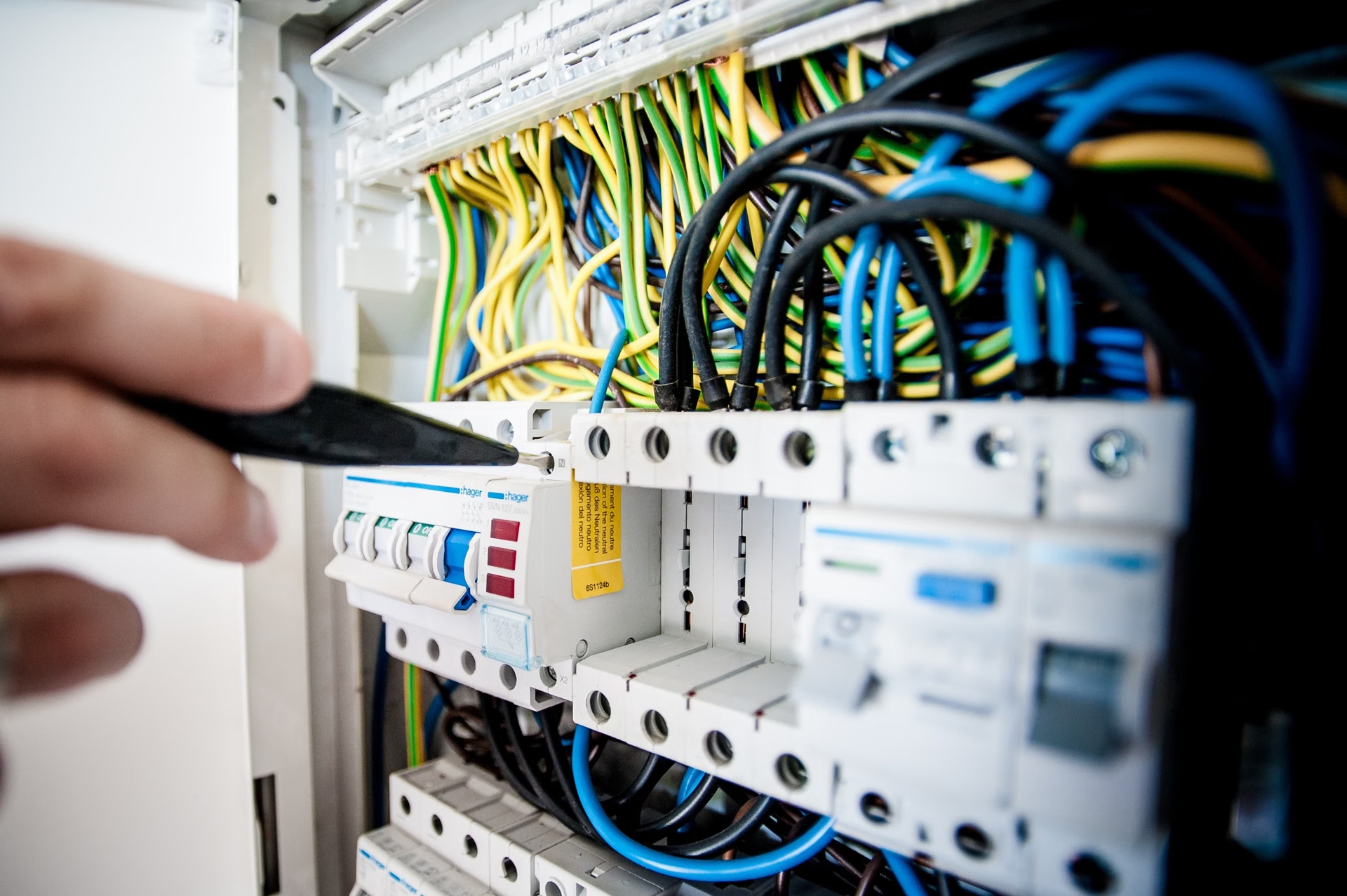
The cost to upgrade electrical panel equipment in an Ontario house is rarely one number, because the job touches three parties: your electrician, the Electrical Safety Authority (ESA) and your local electricity distributor. KV Bear Electrical publishes a range of $2,500 to $5,000 for a residential upgrade between 100 and 200 amps (as of October 2026). Where a particular house lands inside that range depends on what is outside on the wall, what the utility asks for, and what turns up once the old panel cover comes off.
This guide walks through each of those drivers in the order they show up on a real project. It does not repeat whether you need 100 or 200 amps, or the warning signs that a panel is failing; both of those questions have their own articles on this site. Here the focus is money: what you pay for, who sets each charge, and which parts of the bill depend on the town and the utility that serves your street.
The Published Range and What Sits Inside It
People who search for the cost to upgrade electrical panel canada wide will find figures from every province and every kind of contractor, and few of them say what the number includes. For Ontario homes in the areas this company serves, the only figure on this page is the business's own: $2,500 to $5,000 for 100 to 200 amps (as of October 2026). No other contractor prices appear here, because they cannot be checked.
The low end of that range fits a straightforward swap: the new panel goes in the same spot, the service conductors and meter base can stay, the existing circuits are in good condition, and the utility only needs to cut and restore power. The high end reflects jobs where the outdoor service entrance has to be rebuilt, the meter has to move, or old branch wiring needs attention before it can be landed in a modern panel.
Think of the quote as four layers. The first is the panel itself with its breakers and labelling. The second is the service entrance: mast, meter base, conduit and the conductors that run to the panel. The third is paperwork and inspection, mainly the ESA notification and whatever the utility requires. The fourth is anything found inside the house that has to be corrected for the new equipment to be accepted. A written quote that separates those layers is far easier to compare than a single lump sum.
Mast, Meter Base and Service Entrance: The Parts You Own
Many homeowners assume the utility owns everything up to the panel. In Toronto that is not the case. Toronto Hydro's equipment ownership explanations put the service mast, clevis, meter base and conduit on the customer's side, while the utility keeps the service wire and the meter. Hydro One takes the same view: its meter replacement page calls the meter base customer-owned equipment and says repairs or replacement are normally done at the customer's expense.
That ownership split is why the cost to upgrade to 200 amp service can be noticeably higher than a panel swap alone. When the service size goes up, the conductors from the meter to the panel usually have to be larger, and a meter base rated for the old service may not be acceptable for the new one. Toronto Hydro's metering requirements dated January 1, 2026 say every new or upgraded service in its territory must be rated 100, 200 or 400 amps, and must use a weatherproof, CSA approved meter socket that the customer supplies and maintains, mounted outdoors at a spot the utility approves.
Location matters too. Elexicon Energy requires an indoor meter to be relocated outside whenever a residential service is changed. In an older Durham house with the meter still in the basement, that relocation adds new outdoor equipment and a new route for the service conductors, which is one of the clearest reasons a quote moves toward the upper part of the range.
Utility Steps, Utility by Utility
Your electricity distributor decides when the power goes off and when it comes back, and each one runs its own process. None of the steps below are optional, so they belong in any honest estimate of time and cost.
Toronto Hydro (City of Toronto). The upgrade starts with an online service upgrade request. Its How to Power Up Your Home guide asks for a site plan, a proposed electrical drawing, load calculations and any building permits or zoning certifications. A representative contacts you within 10 business days to confirm the scope, and the Job Quotation or Offer to Connect typically takes up to 60 days once all the required information is in. After ESA passes the electrical work and the utility does a final site check, Toronto Hydro completes a service of 750 volts or less in about five business days (as of October 2026).
Elexicon Energy (communities including Ajax, Pickering, Whitby, Clarington, Scugog and Uxbridge). A change in service size, for example 100A to 200A, starts with Elexicon's Connection and Upgrades Request. A technician prepares a Service Layout and Offer to Connect, and Elexicon will not schedule the connection until it has an ESA Connection Authorization. For a panel change that does not alter the service, the shutdown is handled as a service isolation: Elexicon gives each residential customer one free isolation per 12 months during regular business hours and charges for additional ones in that period (as of October 2026).
Oshawa Power (City of Oshawa). Oshawa PUC Networks Inc. takes upgrade requests through an online form and needs an ESA Connection Authorization whose address matches the service address. It cautions applicants not to commit to major expenses until its connection approvals are in place. Booking the crew to cut or restore the service takes a minimum of two days' warning, given only after approvals are complete and anything owing is paid, and the lights stay off until ESA's authorization reaches the utility.
Hydro One (including the City of Peterborough). Raising the amperage of a service needs a service upgrade request, and a Hydro One team member asks questions to decide whether the job needs a design or whether a temporary disconnection will do. Hydro One also tells customers to contact ESA to apply for a permit before changing anything on the service.
The ESA Permit and What It Costs
Every panel or service change in Ontario needs a notification of work with ESA, often called the permit. When a Licensed Electrical Contractor does the job, the contractor files it and the fee is normally part of the quote. ESA's 2026 Wiring Fee Guide lists a new service, service change, panel change or service repair at $86 for a licensed contractor, marked as subject to the guide's $92 minimum notification fee, and at $212 when a non-contractor files (as of October 2026).
The permit is also what links the house back to the utility. ESA explains that for a service upgrade, relocation or replacement the utility has to disconnect the power, and the new installation must be inspected before it is restored. Once the work passes, ESA authorizes the utility to energize the service, and that authorization stays valid for up to six months from the date it is issued.
At the end, ask for the ESA Certificate of Acceptance. ESA describes it as an important document for insurance and resale, and if a contractor filed the notification, the homeowner should ask the contractor for a copy.
Have electrical work in mind? Get a free quote.
Aluminum Branch Wiring and Knob and Tube Found Along the Way
The panel is where every circuit in the house ends, so a panel change exposes the condition of the wiring that feeds it. Two kinds of older wiring change the price more than anything else.
Aluminum branch wiring. ESA says houses built between the mid-1960s and the late 1970s may contain aluminum wiring, and it advises hiring a Licensed Electrical Contractor who knows the special techniques aluminum needs for repairs. In a panel job, that means aluminum circuits must be terminated on devices and connectors rated for the metal, and Toronto Hydro's metering requirements call for a proper bi-metallic connector wherever aluminum and copper conductors are joined.
Knob and tube. ESA dates this wiring to homes built from the early 1900s to the 1940s and recommends an assessment by a Licensed Electrical Contractor, which looks only at the electrical system and is different from a general home inspection. ESA also notes that many insurers will not provide or renew coverage on homes that still have it. Live knob and tube circuits do not simply move into a new panel; the quote should say whether they are being reconnected, replaced or left for a separate project.
Neither finding is certain in any given house, and neither can be judged from the outside. The useful step is to ask, before you sign, how the quote will handle each one if it turns up, and whether that work would be priced separately.
Load Calculation: 100, 150 or 200 Amps
Sizing the new service is a calculation, not a preference, and it affects both the equipment list and the utility paperwork. Toronto Hydro asks for load calculations with the service request, and on its electric vehicle page it suggests working with a licensed electrician to assess capacity. Its self-serve portal also has a peak demand tool that shows the highest amount of electricity the home has drawn at one time, which is a useful number to bring to the first visit.
Some homeowners ask about the cost to upgrade electrical panel to 150 amps as a middle option. In Toronto Hydro territory the service rating itself must be 100, 200 or 400 amps for any new or upgraded service, so a 150 amp service is not one of the listed sizes there. Elsewhere, ask your contractor which ratings your utility accepts before comparing prices, because the meter base, conductors and panel all follow from that choice.
A planned load matters as much as the current one. A heat pump, an electric vehicle charger, a hot tub or a secondary suite all change the calculation. If one of them is coming in the next few years, include it now so the utility request and the ESA notification only happen once.
Replacing a Panel Without Changing the Service
Not every job raises the amperage. The cost to replace electrical panel equipment at the same rating, for example swapping an outdated 100 amp panel for a new 100 amp panel, usually sits toward the lower end of the range, because the utility steps are lighter and the service conductors and meter base may be reusable if they are in good condition and suit the new equipment.
Even a same-size replacement still needs an ESA notification and a utility disconnection. In Elexicon territory that shutdown is the service isolation described above. In Oshawa it means booking the utility crew with the two days' warning described above. In Toronto and Hydro One areas, the request goes through the same service channels as an upgrade, and the utility tells you what it needs.
When comparing an electrical panel replacement cost with an upgrade quote for the same house, check that both include the same layers: panel, service entrance, ESA fee and any wiring corrections. A cheaper figure that leaves out the meter base or the permit is not a lower price, it is a smaller scope.
Timeline Costs: Why the Calendar Matters
The calendar is part of the budget. In Toronto, the Offer to Connect can take up to 60 days after the utility has every document, so a homeowner who plans an EV charger or a heat pump for a set date should start the upgrade early. In Oshawa, the utility's own advice is to avoid major spending until its approvals are in hand. Across utilities, ESA's connection authorization lasts up to six months, which gives some room between inspection and reconnection but is not open-ended.
The power-off window is usually what homeowners notice most. On a typical panel change, the house is without power while the old equipment comes out and the new panel goes in, and the utility's crew sets the timing for the disconnect and reconnect. Plan around that day: fridge and freezer contents, sump pumps, home offices and medical devices all need a plan.
Delays also change cost. A project that stalls between inspection and reconnection may need return trips, and a service left disconnected for a long period can trigger extra steps. In Oshawa, Oshawa Power's Conditions of Service require any service disconnected for six months or longer to be re-inspected and approved by ESA before it is reconnected.
A Checklist Before You Accept a Quote
Use these questions to compare quotes for an electrical panel upgrade cost ontario homeowners can actually plan around:
1. Does the quote name the new service size and panel rating, and the utility that will be contacted? 2. Does it cover the mast, meter base, conduit and service conductors, or does it assume the existing ones are reused? 3. Who files the ESA notification, and is the ESA fee included? 4. Who submits the utility request (Toronto Hydro, Elexicon, Oshawa Power or Hydro One), and what documents will be sent? 5. How will aluminum or knob and tube circuits be handled if they are found? 6. Is a load calculation included, and does it account for planned equipment such as a charger or heat pump? 7. When will you receive a copy of the ESA Certificate of Acceptance?
Finally, check the licence. ESA warns homeowners about anyone who says the local electric utility does not need to be involved to change a panel or upgrade a service. KV Bear Electrical holds ECRA/ESA licence 7014730, and ESA's contractor lookup lets anyone confirm a licence by name or number before work starts.
Frequently Asked Questions
Why do two quotes for the same panel upgrade differ by thousands of dollars?
Usually because they cover different scopes. One may include a new meter base, mast and service conductors, the ESA fee and a load calculation, while the other assumes the outdoor equipment can be reused. Ask each contractor to list the panel, service entrance, permit and utility steps separately so you can compare like with like.
Who pays for the meter base when the service size goes up?
In most cases the homeowner. Toronto Hydro lists the service mast, clevis, meter base and conduit as customer equipment, and Hydro One says the meter base is customer-owned and is normally repaired or replaced at the customer's expense. The utility keeps the meter and, in Toronto, the service wire.
Is the ESA fee for a panel change included in a contractor's price?
When a Licensed Electrical Contractor does the work, the contractor files the notification and the fee is normally built into the quote. As of October 2026, ESA's fee guide lists a service or panel change at $86 for a contractor, subject to the $92 minimum notification fee, and at $212 for a non-contractor filing.
Can I get a 150 amp service from Toronto Hydro?
Toronto Hydro's metering requirements dated January 1, 2026 list 100, 200 and 400 amps as the ratings for new and upgraded services, so 150 amps is not one of the listed service sizes there. Other utilities set their own rules, so confirm the accepted ratings with your contractor before you compare prices.
How long can the power stay off after ESA passes a new service?
Once the inspection passes, the go-ahead ESA sends the utility lasts a maximum of six months. In Oshawa, the crew visit to switch the house back on is booked with two days' warning, and the utility waits for ESA's paperwork before it energizes anything.
Sources
- Toronto Hydro: Service upgrade request
- Toronto Hydro: How to Power Up Your Home (January 2025)
- Toronto Hydro: Equipment ownership explanations
- Toronto Hydro: Metering requirements, 750 volts or less (January 1, 2026)
- Toronto Hydro: Electric vehicles
- Elexicon Energy: Upgrades, relocations and renovations
- Elexicon Energy: Residential service isolation
- Elexicon Energy: About us
- Oshawa Power: Service request application form
- Oshawa Power: Upgrade, new or temporary service form
- Hydro One: Service upgrade
- Hydro One: Electricity meter replacement
- City of Peterborough: Utilities
- ESA: 2026 Wiring Fee Guide
- ESA: What is a service connection inspection?
- ESA: Certificate of Acceptance
- ESA: Aluminum wiring
- ESA: Knob and tube wiring
- ESA: The electrician you're looking for doesn't exist
- ESA: Contractor Locator Tool FAQs and instructions
- Oshawa Power: Conditions of Service (November 2024)
Facts checked October 14, 2026.
KV Bear Electrical Inc. is a licensed residential electrical contractor (ECRA/ESA 7014730) based in Oshawa, Ontario. Facts in this guide are taken from the official sources listed above. Have a question about your home? Call 905-999-5048.
Related Services:
Related Guides
ESA Permits in Ontario: What Needs One, Who Files and What It Costs
Ontario's electrical permit is an ESA notification of work. Here is what needs one, which small jobs are exempt, who is allowed to file, what ESA charges as of October 2026, and why an open notification matters when a house is sold.
Read the guideKnob and Tube Wiring: What It Means for Your Insurance and What to Do About It
If you own a pre-1950s home in Ontario, there is a reasonable chance it has knob-and-tube wiring. And if your insurance company has been asking questions about it, you are not alone.
Read the guideHow Much Does an EV Charger Installation Cost in Ontario?
Most Level 2 EV charger installations in Ontario cost between $800 and $2,500 — but that range depends on several factors specific to your home. Let us break down what goes into that number.
Read the guide