
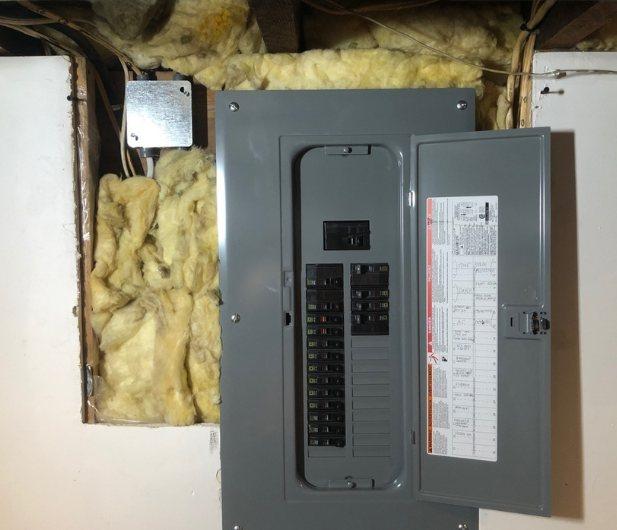
Most people start asking when to replace electrical panel equipment because something changed. A breaker will not stay on. A home inspection report has a note about the panel. An insurer has questions, or you want to add an EV charger or a heat pump. What counts most is how the panel behaves, what condition it is in and whether it can carry the loads you plan to add.
Here are seven signs that point toward a replacement. Along the way you will also find what Ontario's Electrical Safety Authority (ESA) says about older fuse panels, which official recall and safety notices actually name panel equipment, and who is allowed to do the work. Prices are not covered here. For those, see our guide What Does It Cost to Upgrade an Electrical Panel in Ontario?
Signs your electrical panel needs replacement: the short list
Any one of these is a reason to have a Licensed Electrical Contractor look at the panel. That does not mean every one ends with a new panel. Some turn out to be a single loose connection, an overloaded circuit or one failed breaker that can be swapped on its own. An assessment tells you which.
1. Breakers that trip, or fuses that blow, again and again. 2. Heat, a hot plastic smell or discolouration. 3. Lights that flicker or dim. 4. A fuse panel still in service, especially one fitted with the wrong fuses. 5. Scorching, rust or a panel that has been wet. 6. Not enough capacity for what you want to add. 7. Equipment named in a recall.
Why take them seriously? ESA's flash notice on residential fires linked to electrical wiring and equipment lists breaker and fuse panels among the sources of home electrical fires, along with circuit wiring, extension cords, light fixtures, receptacles and switches. So when one of these signs shows up, look into it instead of resetting the breaker and forgetting about it.
1. Breakers that trip or fuses that blow again and again
In its 2025 flash notice on residential electrical fires, ESA names circuit breakers that frequently trip, or fuses that frequently blow, among the signs that a homeowner should retain a Licensed Electrical Contractor to evaluate the system. A trip on its own just means the breaker did its job and opened the circuit. What you want to know is why it keeps happening.
Toronto Hydro's outage advice offers a sensible first step for any home: unplug appliances that may be overloading the circuit, then reset the breaker. If it trips again, Toronto Hydro says not to reset it, because that may indicate a more serious problem and you should contact a qualified electrician. Repeat trips have several possible causes: too much load on one circuit, a fault in a device or cable, or a worn breaker. Only some of those come back to the panel itself, and a contractor sorts them out by testing.
2. Heat, a hot plastic smell or discolouration
A panel cover should not feel warm, and the air around it should not smell like hot plastic. ESA's aluminum wiring page lists warm cover plates, discoloured switches or receptacles, flickering lights and a smell of hot plastic as signs of a problem, and it says houses built between the mid-1960s and the late 1970s may have aluminum wiring. Every branch circuit in the house ends at the panel, so treat those same symptoms at the panel just as seriously.
Smoke or flames: get everyone out and call 911. Only heat or an odour: do not remove the panel cover yourself. Keep the load on the affected circuits light and book an assessment by a Licensed Electrical Contractor.
3. Lights that flicker or dim
The same 2025 ESA flash notice puts flickering lights on its list of warning signs, next to frequent trips and signs of wiring deterioration. One flickering fixture may just be a problem with that fixture or its switch. Lights dipping in several rooms whenever a large appliance starts up is another matter.
Before the visit, jot down which lights, which appliance and how often. With those notes, the contractor can decide whether to start at the fixture, the circuit or the panel, and it saves time on site.
Have electrical work in mind? Get a free quote.
Licensed & Insured | ECRA/ESA 7014730
4. A fuse panel still in service
ESA does not say every fuse panel has to go. Its flash notice on shock hazards associated with older fuse panels notes that some were installed before 1940 and complied with the codes and standards in force at the time. It also says that "if maintained properly, complete with the correct size and type of fuses, these panels will still be adequate to protect electrical circuits and equipment."
What worries ESA is shock. On some older fuse panels, opening the cover gives access to bare energized terminals, and ESA warns that "many of these older electrical fuse panels may not provide adequate shock protection for persons replacing fuses." For a higher level of safety, ESA describes two options: replace the fuse panel and its enclosure with a new breaker panel, or retrofit new breaker interiors into the existing enclosure. In rented, tenant-occupied homes, ESA calls for a cover that opens only with a key or tool and carries a warning label.
Check the fuses too. ESA's knob and tube notice lists using 20 or 30 A fuses to replace 15 A fuses as an improper practice. Oversized fuses, or a circuit that blew so often that someone put in a bigger fuse, are a reason to call a contractor. They are not a fix.
5. Scorching, rust or a panel that has been wet
If you see scorch marks, melted insulation, rust or water staining on or inside the panel, stop using the affected circuits where you safely can and get the panel assessed. Water is the most clear-cut case. ESA's guideline for electrical installations exposed to water says breakers, GFCIs, AFCIs, surge protective devices and smoke and carbon monoxide alarms that have been sprayed or submerged must be replaced, because there is no way to be sure these life safety devices will work as intended afterwards.
If a basement flood reached the panel, have the contractor check every breaker and device against that rule, and keep the written findings for your insurer.
6. Not enough capacity for what you want to add
A panel can be in sound condition and still be too small. Toronto Hydro's heat pump guide says a panel's amperage is typically printed on or near the main breaker, and that most homes fall between 100 and 200 amps. Elexicon Energy's article comparing the two sizes suggests 100 amps can work in an older home that heats or cooks with gas, while air conditioning, a pool, a hot tub or an EV charger points toward 200 amps.
In everyday terms, you are probably close to the limit if there are power bars in every room, the panel has no free spaces, or a new appliance cannot go in without circuits being shuffled around. A load calculation by a contractor turns those hints into a firm answer. Our post 100 Amp vs 200 Amp Panel: When Do You Need an Upgrade? goes further into sizing.
If you do need a larger service, the utility becomes part of the job. ESA's homeowner handbook says that if your home requires an electrical panel upgrade, you will need to contact your local utility, and that a Licensed Electrical Contractor can assist.
7. Old electrical panel brands: what official notices name
Only equipment that an official notice names is listed here. Two notices are worth knowing about.
Health Canada recall (2022). Health Canada published a joint recall with the U.S. Consumer Product Safety Commission (CPSC) and Schneider Electric Canada for various Square D Plug on Neutral (PON) load centres by Schneider Electric, which it said could overheat, potentially posing a fire hazard. The notice lists specific catalogue numbers and date codes, and it told owners to contact Schneider Electric Canada to arrange an inspection. Keep in mind that a recall covers particular models and production dates, not everything a brand has ever made.
CPSC investigation of Federal Pacific Electric (FPE) Stab-Lok breakers (1983). This one is a U.S. record, and it is not a recall. The CPSC opened an investigation in 1980 after the parent company, Reliance Electric, reported that many FPE breakers did not fully comply with Underwriters Laboratories (UL) requirements. The commission's own testing found the breakers failing certain UL calibration tests. In March 1983 the CPSC closed the investigation, saying it was unable at that time to link these failures to the development of a hazardous situation, and it closed the matter without making a determination as to the safety of FPE circuit breakers.
Want to check your own equipment? Note the brand and model on the panel label, search Health Canada's Recalls and Safety Alerts database, and pass along whatever you find to your contractor.
Old electrical panel or failing panel? Age is not the deciding factor
An old electrical panel is not automatically unsafe. ESA's position on fuse panels makes that clear: equipment installed decades ago can still protect its circuits when it is maintained with the correct fuses. The things that change the answer are condition, behaviour and demand. In practice that means the signs above, an insurer or buyer asking for documentation, or plans to add large loads.
For your house in particular, an assessment by a Licensed Electrical Contractor settles it. Usually the choice is between repairing what is there, replacing individual parts, replacing the panel at the same rating, or upgrading the service. Get the findings in writing so you can compare the options and keep a record.
Who can replace an electrical panel in Ontario
Panel work is regulated. ESA's do-it-yourself rules say only the homeowner or a Licensed Electrical Contracting business may do electrical work in a home. Friends, family members and neighbours cannot help. Anyone you hire must be a Licensed Electrical Contractor, and a homeowner who does the work must file a notification with ESA.
Two warning signs on ESA's consumer pages apply directly to panels: a contractor who says "you don't need to involve your local electric utility to change your electrical panel or upgrade your electrical service," and one who asks you to file an ESA permit or notification of work in your name. When you hire a licensed contractor, the contractor files and ESA inspects. Work that passes inspection gets an ESA Certificate of Acceptance, a document ESA calls important for insurance purposes, resale and peace of mind. Keep a copy with your house records.
Our panel upgrade service page and the guide What Does It Cost to Upgrade an Electrical Panel in Ontario? explain how the work is done and priced. KV Bear Electrical (ECRA/ESA 7014730) assesses residential panels, files the ESA notification and coordinates with the local utility when the service changes. Call 905-999-5048 to book an assessment or request a quote.
Frequently Asked Questions
How can I tell whether my electrical panel needs repair or full replacement?
You need an assessment to know. Frequent trips, heat, flickering and water damage can all come from one breaker or connection, not only from the panel. A Licensed Electrical Contractor can test the circuits and the panel, then give you written findings that show whether a repair, a same-size replacement or a service upgrade is the right fit.
Should I reset a breaker that trips again right after I turn it back on?
No. According to Toronto Hydro's outage guidance, a breaker that trips again after you reset it should be left off, because it may indicate a more serious problem that needs a qualified electrician. Unplug whatever was running on that circuit, then book an assessment.
Does ESA require homeowners to replace an old fuse panel?
Not as a blanket rule. ESA's flash notice on older fuse panels says they can still adequately protect circuits and equipment when properly maintained with the correct size and type of fuses. The same notice flags a shock concern when fuses are changed, gives breaker panel replacement or a breaker retrofit as options, and calls for key or tool operated covers with a warning label in tenant-occupied homes.
Have any old electrical panel brands been recalled in Canada?
Health Canada's 2022 recall covered various Square D Plug on Neutral (PON) load centres by Schneider Electric because they could overheat. Federal Pacific Electric Stab-Lok breakers were investigated by the U.S. CPSC, but that case closed in 1983 without a recall. To check yours, search Health Canada's Recalls and Safety Alerts database for the brand and model on the panel label.
Sources
- ESA Flash 25-06-FL: Residential fires linked to electrical wiring and equipment (May 2025)
- Toronto Hydro: What to do during an outage
- ESA: Aluminum Wiring
- ESA Flash 19-22-FL: Electrical shock hazards associated with older fuse panels
- ESA Flash 25-05-FL: Knob and tube wiring in residential installations (May 2025)
- ESA: Guideline for electrical installations exposed to water
- Toronto Hydro: Heat pumps guide
- Elexicon Energy: 100 amp vs 200 amp
- ESA Homeowner Electrical Safety Handbook: Inside Your Home
- Health Canada: Various Square D Plug on Neutral (PON) Loadcentres by Schneider Electric recalled due to potential fire hazard
- U.S. CPSC: Commission Closes Investigation of FPE Circuit Breakers (March 3, 1983)
- ESA: Do-It-Yourself (DIY) Electrical Work
- ESA: Identifying an Unlicensed Electrical Contractor
- ESA: Finding the Right Contractor
- ESA: Certificate of Acceptance
Facts checked October 21, 2026.
Licensed electrician (ECRA/ESA 7014730) working in 31+ Ontario communities, including Cobourg, Oshawa, Whitby, Peterborough, and Toronto. Got a question? Call 905-999-5048 for a free quote.
Related Services:
Related Guides
Common Electrical Code Violations in Ontario Homes
Ontario's electrical rules sit in a provincial regulation, and ESA enforces them through notifications and inspections. ESA also warns homeowners about specific household problems. Unpermitted work is its own issue, because it can surface when a house changes hands.
Read the guideGFCI Outlet Guide: What It Does, Where It Goes and TR Ratings
A GFCI outlet looks like any other receptacle with two buttons added. It cuts power when it detects a ground fault, ESA lists where Ontario homes need one, and the test button shows whether it still protects you.
Read the guideShould You Get an Electrical Inspection Before Selling Your Home?
We found no Ontario rule that makes a seller get an electrical inspection, but buyers are told to verify open permits with ESA, so a pre-listing check can catch problems first.
Read the guide